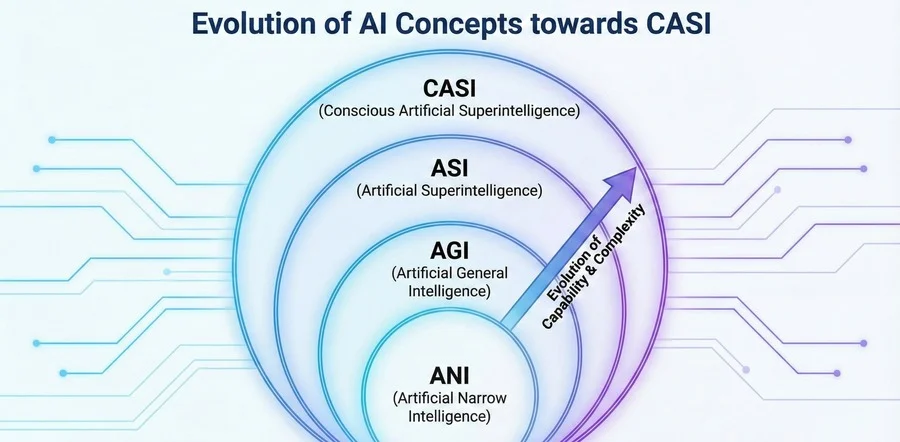
President Donald Trump has ordered federal agencies to adopt the ‘superintelligence’ term, replacing ‘artificial intelligence’ in all official communications. He signed an executive order on Tuesday to formalize this change. The directive also tasks a presidential advisory council with defining this new concept.
This order seeks to improve the public image of advanced technology. Critics of the artificial intelligence industry have recently grown louder in the United States. Consequently, federal departments must now use “superintelligence” and its acronym “SI” in all correspondence and policy documents.
The Presidential Council of Advisors on Science and Technology will propose an official federal definition for “superintelligence.” They will also determine any necessary future executive actions for its implementation. The White House frames these measures as part of a broader strategy. It aims to accelerate the use of advanced systems in critical sectors. These include scientific research, medicine, energy, and industry.
This decision comes just six weeks before legislative elections. Trump and Republicans face the challenge of retaining their slim majority in Congress. Meanwhile, a significant debate continues regarding data centers’ community impact. Concerns also persist about the risks posed by highly advanced AI systems. Leading tech companies have themselves urged for stronger safeguards.
By contrast, Trump has consistently rejected stringent controls. He advocates for the United States to maintain its technological leadership over China. Earlier on Tuesday, President Trump hosted a working lunch at the White House. Top executives from major U.S. AI and technology firms attended this gathering. Discussions focused on AI development, security, and the expansion of data centers.
Following the meeting, Trump and leaders from six major U.S. tech firms signed a voluntary agreement. Sundar Pichai (Google), Elon Musk (XAI), Dario Amodei (Anthropic), Mark Zuckerberg (Meta), and Jensen Huang (Nvidia) were among them. This pact strengthens AI security through internal controls. These measures monitor model capabilities and behavior, especially against cyberattacks. They also include risk assessments and external reviews.
In addition, Trump announced a revamp of federal online services. These services will integrate AI to expand their functions. Users will soon be able to apply for passports and access public benefits more efficiently. This initiative is another part of the campaign to enhance the technology’s image across the nation.