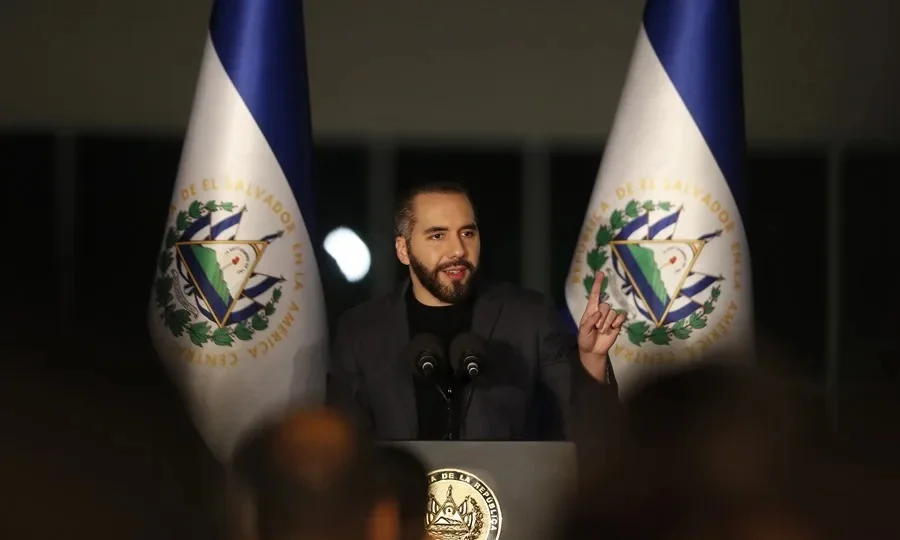
El Salvador’s President Nayib Bukele recently lauded the remarkable success of the nation’s AI education pilot program. This initiative utilizes artificial intelligence tutors in public schools. Significantly, an international evaluation revealed that participating students achieved academic results comparable to those found in Sweden and Germany.
President Bukele shared the positive assessment from the World Bank’s Latin America X account. According to these findings, the pilot’s initial phase yielded impressive outcomes. The program began over a year ago, encompassing 171 public schools across the country.
PISA for Schools conducted the evaluation in June of this year. This assessment is part of the Programme for International Student Assessment, a study by the OECD. The Organization for Economic Co-operation and Development supports governments in crafting effective public policies.
Furthermore, the World Bank noted the immense potential of these initial results. Although they do not yet reflect the entire educational system, they demonstrate that substantial improvements are achievable. These gains can materialize even in the short term, given quality technical work and rigorous implementation.
This groundbreaking AI education pilot has already expanded to over 1,000 schools. President Bukele also announced ambitious plans for the future. He stated that within 18 months, the program will be implemented in all public schools nationwide.
In December 2025, Elon Musk’s xAI company announced a partnership with El Salvador’s government. This collaboration aims to launch the world’s first national AI-powered education program. Consequently, xAI’s Grok assistant will be deployed in over 5,000 public schools within the next two years, though specific costs remain undisclosed.